
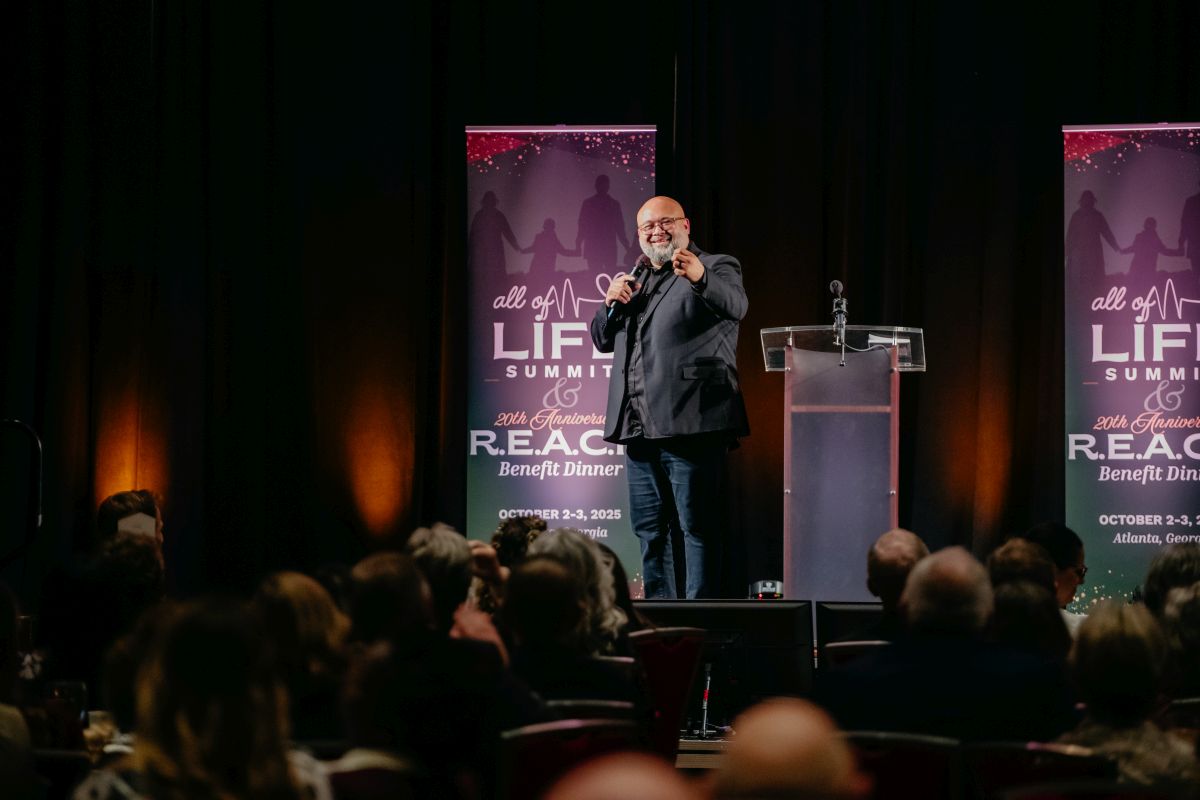
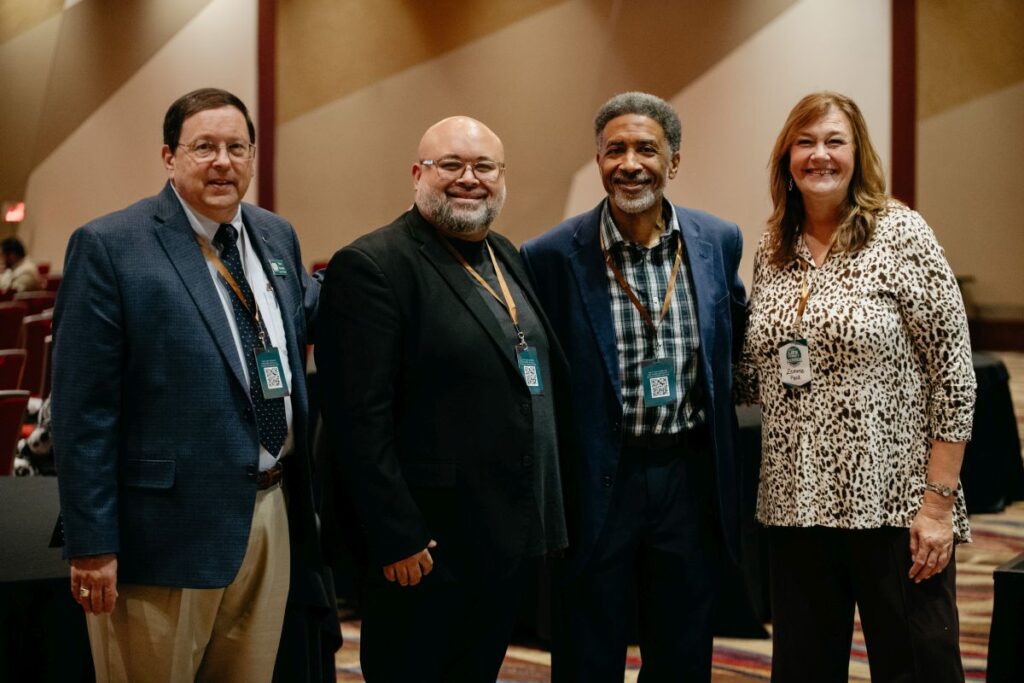
Did you miss the event? Mark your calendar for October 2026, and check out the highlights below.
• Answering the Rape Exception
• IVF and Human Embryos: Finding Common Ground
• God Tells the Best Stories: Paul Vaughn and Lauren Eden
• 20th Anniversary R.E.A.C.H. Dinner
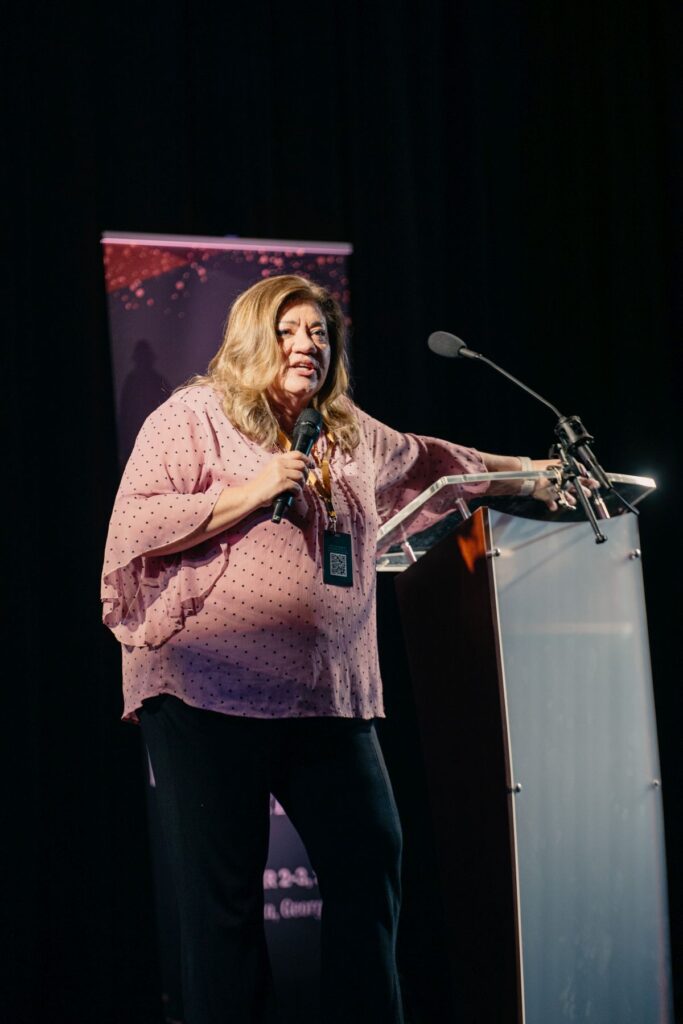
Pam Stenzel
Answering the Rape Exception
Pam Stenzel’s birth mother was the posterchild of the type of person who needs an abortion. Raped at 15, Stenzel’s mom was a foster child. But it was 1965, and Pam’s life was spared.
“The rape exception is misplaced compassion,” said Stenzel. She explained that, of the people involved, abortion kills the baby, harms the mother, and shields the rapist.
Stenzel emphasized the inconsistency of pro-lifers who want to focus on ending abortion with the exception of rape and incest cases. It is as if some pro-lifers are saying, “Pam, we’ve got to save all of these, and then we’ll come back for you.”
The fight against abortion must be grounded in six principles, Stenzel said:
- that humans are made in the image of God;
- that humans are human from their earliest biological beginning;
- that humans aren’t constructed but develop from within;
- that all humans have God-given rights;
- that equality is based on humanness; and
- that God calls us to works of justice and mercy.
Stenzel concluded that the solutions are love and truth: “My birth mother needed someone to love her,” she said. And for a woman who has had an abortion, Stenzel says that “the only way she’ll heal is if we speak the truth.”
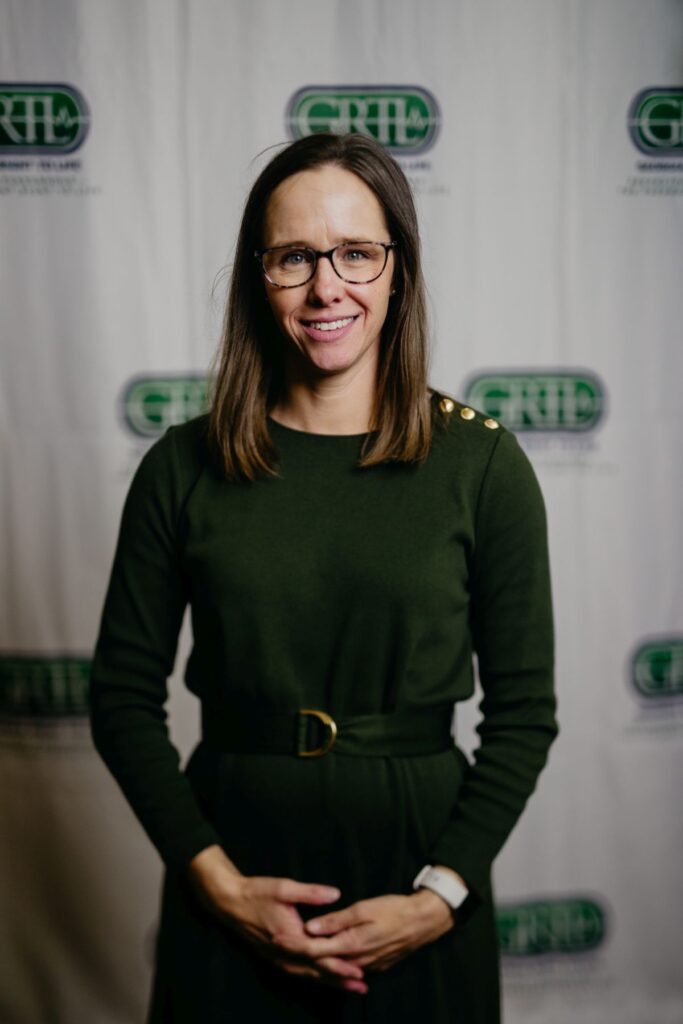
Dr. Alicia Thompson
IVF and Human Embryos: Finding Common Ground
Next to the stage was Dr. Alicia Thompson, DO, who enlightened the audience on the rampantly unregulated world of Assisted Reproductive Technology (ART).
Thompson showed jarring statistics related to ART from Europe because statistics are not tracked well, if at all, in the American ART industry. Based on data from 2023, she demonstrated that the embryo-to-live-birth ratio was only 4.9%. This means that of all of the new persons that were created in a laboratory, less than 5% are born. The rest are frozen, are tested on, or die.
Additionally, the legal status of embryos created via in-vitro fertilization (IVF) is fuzzy at best. In 2024, the Alabama Supreme Court ruled that frozen embryos are children. But in a Tennessee Supreme Court case, Davis v. Davis in 1992, the court ruled that preembryos are a marital property of a special kind.
Georgia Right to Life maintains the firm stance that “these practices pose a threat to the lives of children at the embryonic stage.”[1]
“America’s frozen embryo crisis is the result of our rejection of biblical personhood,” said Ricardo Davis, President of Georgia Right to Life. “Dr. Thompson’s presentation was both eye-opening, informative, and hopeful; she set some attainable goals to begin tackling the problems associated with IVF. And Restorative Reproductive Medicine is a compassionate response to husbands and wives dealing with the pain of infertility.”
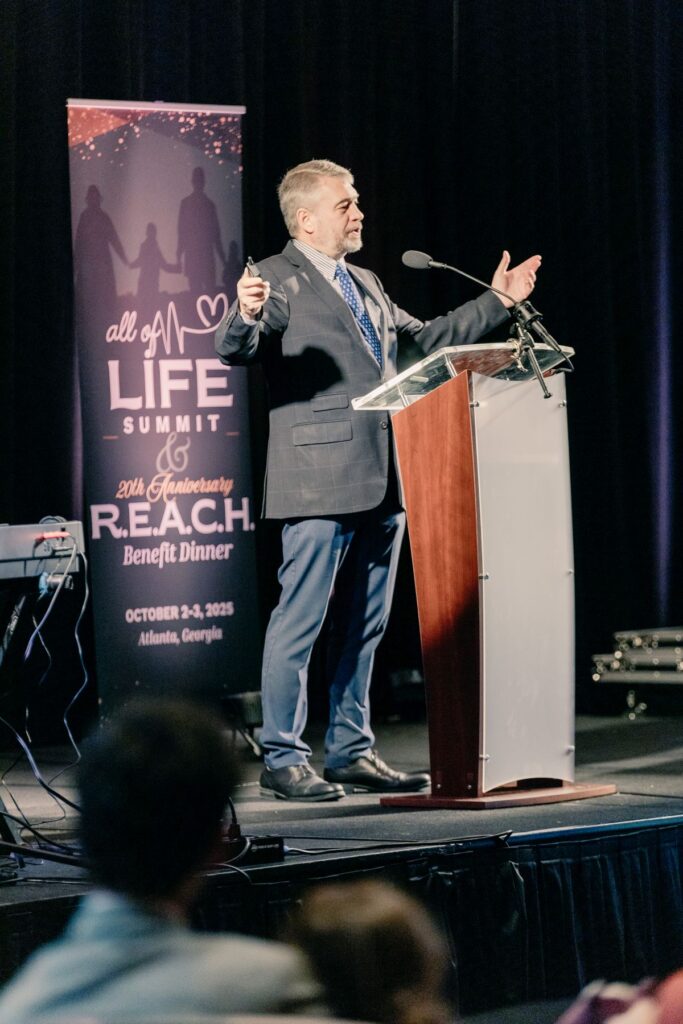
Paul Vaughn
God Tells the Best Stories: Paul Vaughn and Lauren Eden
As the day progressed and more attendees trickled in after lunch, the speakers’ stories became more personal. In the first afternoon session, Paul Vaughn shared about being persecuted by the FBI for praying outside of an abortion mill.
“God tells the best stories,” said Vaughn. The father of 11 explained that the U.S. government used a “1960s KKK Act” to prosecute him for his participation in peaceful prayer in a public space near the local abortion mill. “They were talking about taking ten years from my life,” said Vaughn, “but when I became a Christian, I laid my life down.”
Vaughn half-joked to the audience to “be careful what you pray for.” He views his trials as an unexpected answer to his prayer to be elevated to a platform from which he could speak truth and defend more lives.
Vaughn had the audience members on the edge of their seats. One attendee, Lasslo Pallos, commented that “hands down, [his favorite speaker was] Paul Vaughn.”
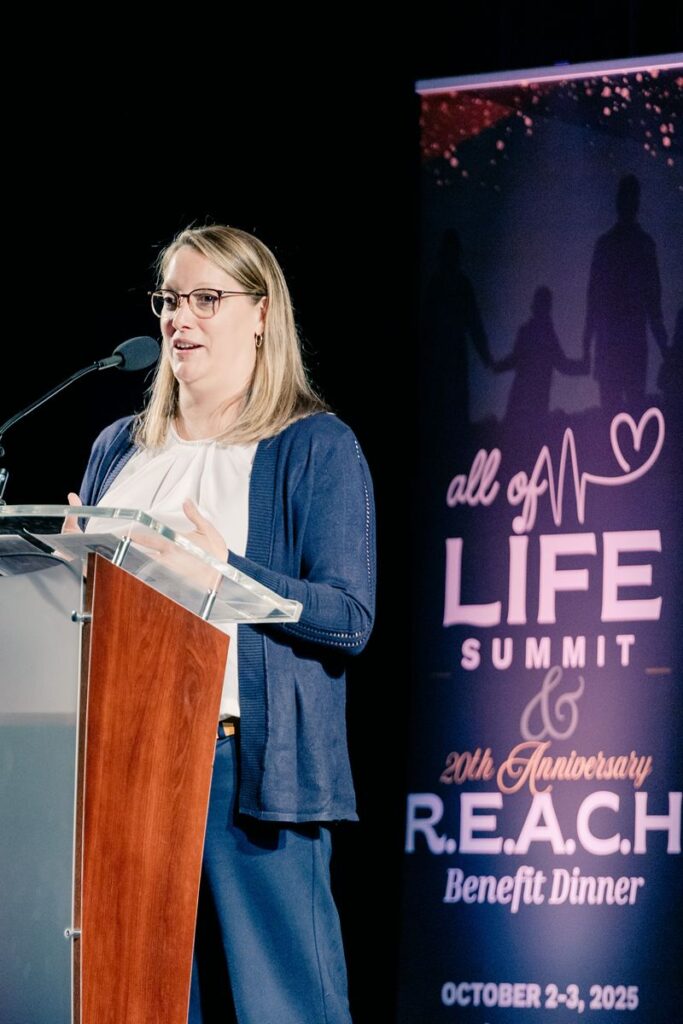
Lauren Eden
Next, Lauren Eden came onstage. Blonde and unassuming, with a peaceful air, she took to the mic and swept the audience away with her incredible tale of miracle after miracle that God used to save her life. Agreeing with Vaughn, she said, “God writes the best stories, and I am living proof of that.”
Eden was conceived when her parents were dating in college. Her dad begged her mom not to abort, but all her mom could see were the circumstances. Through a series of serendipitous misadventures, Eden’s mom went to clinic after clinic. Each time, Eden measured too big to abort. Her mom recalled that it was like “someone larger than myself was trying to stop me.”
In a scene that could have been taken out of a movie, Eden’s dad arrived at the final abortion mill against all odds. He was late. Suddenly, the elevator opened, and there stood Eden’s mom, also running late, coming to the clinic for her dilation and evacuation.
With the support of her then-boyfriend, Eden’s mom decided not to finish the abortion, and the couple drove to a pro-life OBGYN, who gave Eden slim prospects for living a normal life, if at all. Another miracle: though she was born 13 weeks early, Eden was okay.
“God saved my life physically, but He saved my mom’s life spiritually,” Eden said.
There were very few dry eyes by the end of her presentation.
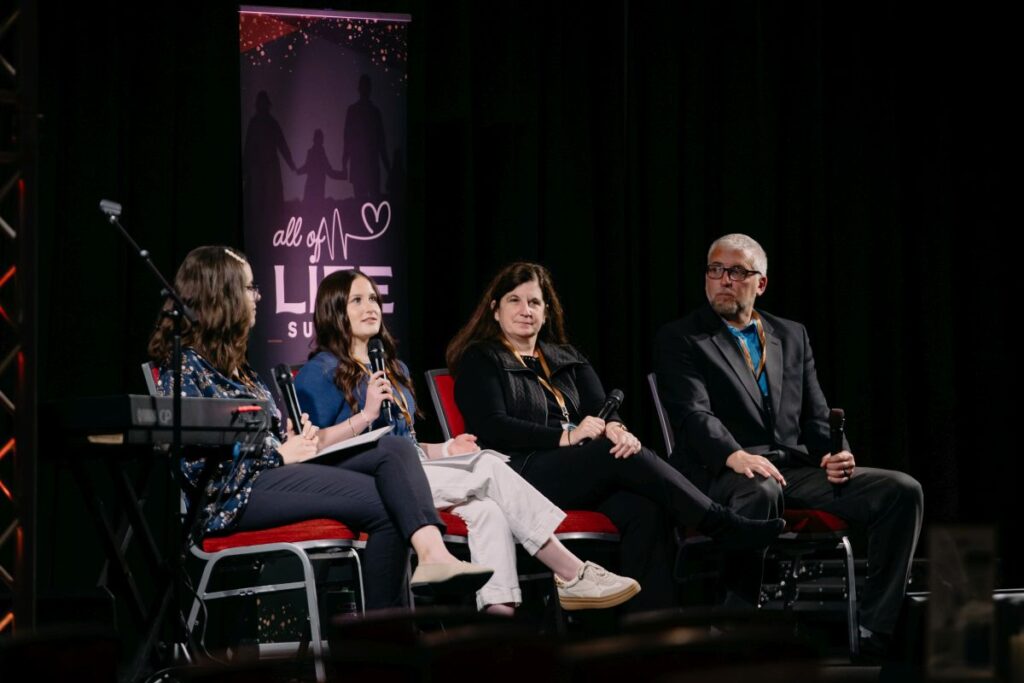
R.E.A.C.H. Dinner
The second day of the All of Life Summit featured several panel discussions that focused on pro-personhood activism and various ministries that promote life in their everyday functions.
The highlight of the day was the Raising Educational Awareness and Changing Hearts (R.E.A.C.H.) dinner Friday evening. This dinner was extra special since it was the 20th anniversary of the event and featured a slide show of all of the speakers over the past 20 years.
With about 500 attendees present, Steventhen Holland shared his story of life-giving love. When Holland was a newborn, he was placed in foster care with a white family in Tennessee. He was too weak to eat, so his foster parents squeezed drops of milk into his mouth and let him sleep on his foster father’s chest until he was strong enough to sleep alone.
Holland’s foster family loved him. At six months of age, Holland’s skin began to grow darker, since he is biracial, and the DHS wanted to move him to a non-white home. But the Hollands fought to keep their son, and after a year and a half legal battle and 250 letters written by his community on behalf of his family, Holland was finally adopted at age 2.
Yet still, as he grew and began to notice his different appearance, Holland struggled with feelings of unwantedness. At age 27, Holland researched his birth family and went to meet his uncle. It was there that Holland learned about his birth mother.
“She carried me homeless, sleeping in a cardboard box behind a grocery store,” Holland said. “Birth moms matter. So do birth dads,” said Holland, who continually emphasized how his birth mom – who was mentally handicapped – is his hero.
“Steventhen was an incredible speaker with an incredible story,” commented attendee Timmy Bleekrode. “[His mother] chose life when that wasn’t an easy decision, but she knew through God that her son’s life was worth so much, and now he is able to transform so many people’s lives through his story. … I am incredibly thankful she chose life as I had the privilege to hear her son speak! What an amazing night!”
In closing, we hope that you will make every effort to join us in October 2026 as we look forward to more incredible pro-personhood testimonies, as well as fellowship and encouragement when we gather again.
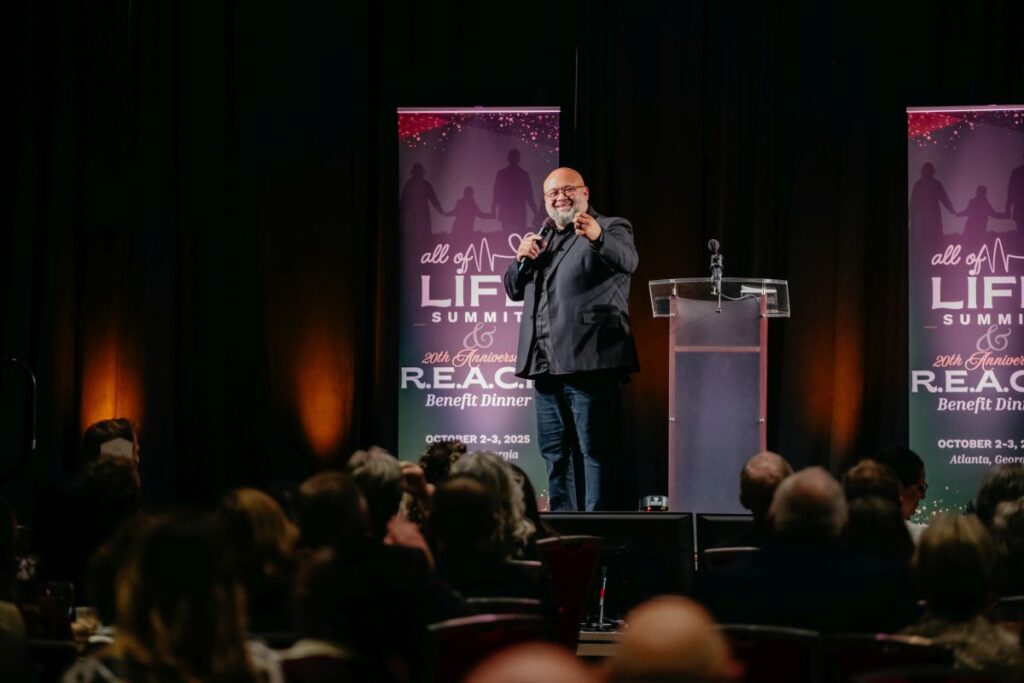
Featured Speaker Steventhen Holland
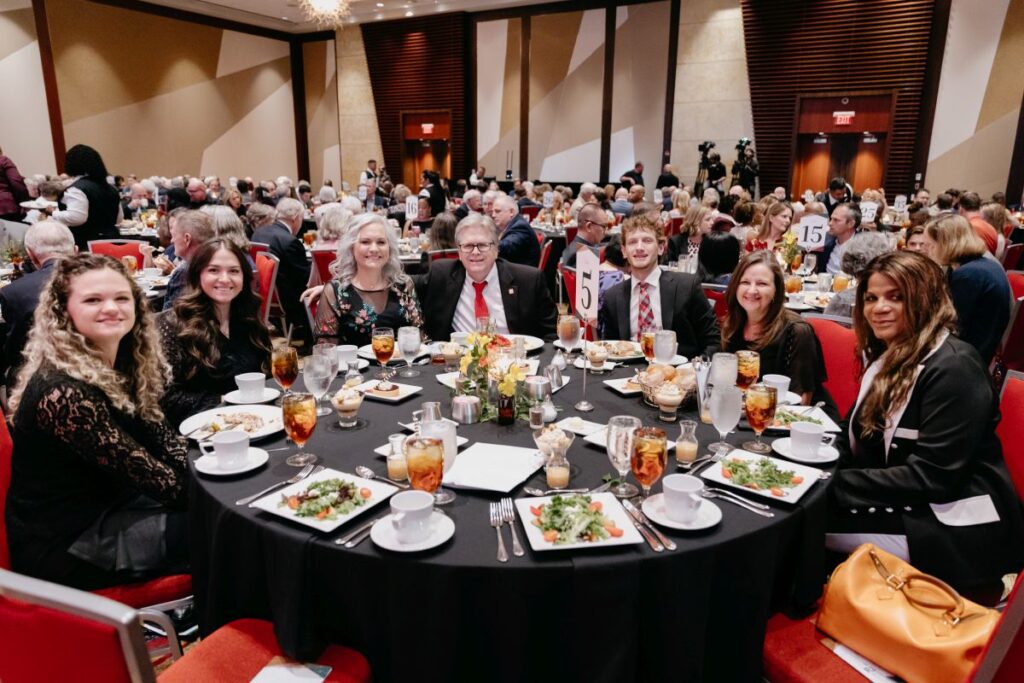
Guests enjoy dinner and fellowship at the R.E.A.C.H. 2025 Benefit Event
Rachel Krause
Newsletter Editor, Georgia Right to Life
[1] GRTL ART Position Statement

Georgia Right to Life Committee (GRTL) is a faith-based, non-profit, non-partisan, non-sectarian organization whose fundamental purpose is to engage in actions that will restore respect and effective legal protection for all human beings from the moment of fertilization until natural death.