
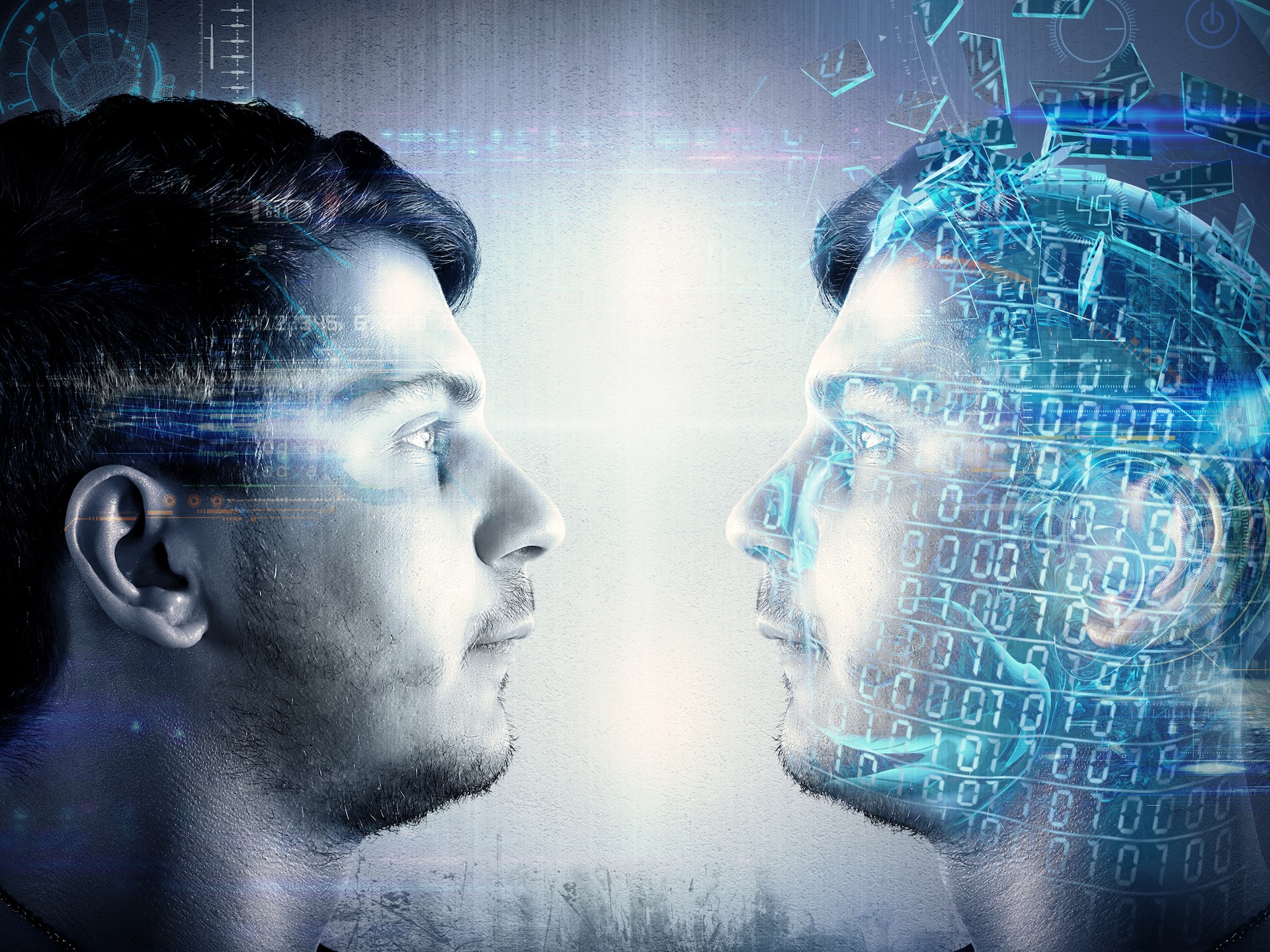
Gray Scott, a leading techno-philosopher, was quoted as saying,
“The real question is, when will we draft an artificial intelligence bill of rights? What will that consist of? And who will get to decide that?”
The culture is now wrestling with attributing rights to AI in an anthropomorphizing manner. If there is a concession that personhood is not inherent to human beings, but it is something that can be gained or lost (i.e., through sentience or consciousness), it carves a dangerous pathway that will harm the essence of biblical personhood and what it means to be a human.
Henceforth, an effort to pursue an understanding of both AI and humanity through the lens of Scripture is critical.
What AI is and What AI is Not
Artificial intelligence is “a mathematics-based number crunching tool, nothing more than that.”[1] It is a machine that does not have intelligence, but rather simulates intelligence based on its programming. And while it simulates intelligence, it does not possess consciousness, nor does it possess autonomy. AI is an artifact, a piece of technology, created by man aiming to replicate or mimic the image bearers of God.
Today’s society and leading innovators have worked relentlessly to insist that AI is something it is not. In an attempt to personify artificial intelligence machines, their creators have made the culture question what it means to be a human. Is it simply our consciousness or sentience that makes us human or allows us the fundamental rights guaranteed under the Constitution?
Biblically speaking, humans are created by the one holy, true, and living God. Genesis 1:26-27 says God created man in His own image, the Imago Dei. So, it is not the mere fact that humans possess consciousness or sentience that makes man valuable. The value and the human rights that flow from it are intrinsic and inherent. When it comes to AI, its value is extrinsically programmed and refined by fallen man[2], not by a holy God.
The Harms of AI on Personhood
Dr. John Lennox, an Oxford professor and theologian, studied and analyzed AI, its threats, and how it has emerged in society. He concludes that the development of AI technology is vastly driven by a dangerous and sinful mindset: “we shall be as gods.”[3]
Throughout history and still today, humans have demonstrated a desire for divinity. This very drive is why its creators are insisting that AI has or will have consciousness and personhood, with the potential to become the moral equivalent of a human being. This is problematic because, as Lennox asserts, when we try to change what it means to be human, then we are playing god.
Personifying AI dehumanizes the Imago Dei, and in turn, devalues and corrodes personhood. To attribute personhood to a mathematical tool reduces the Imago Dei to something man can recreate, making man like God. This is not only impossible, but it is also sinful.
Attributing personhood to AI can cause one to fall into the ditch of transhumanism, an ideology that has been studied to reveal that “the final goal seems to be the abolition of human nature.”[4] If the final goal is the abolition of human nature and elevating AI to the status of obtaining personhood is a stepping stone, what does that mean for the sanctity of human life? The most reasonable implication is that AI slowly erodes its sanctity.
Furthermore, AI has a more indirect and subtle way of devaluing humans as its proficiency rises. Critical thinking is important to human flourishing, but on some level, AI has reduced the need for humans to do something so simple. Dr. Sean McDowell, a professor at Biola University, asserts that “When we export things humans should do to technology, we lose something of what uniquely makes us human and flourish.”[5]
AI is effortlessly slipping its hand into the life of millions of individuals, becoming a crutch for simple, daily tasks. Not only is it making the average person more intellectually numb and dependent upon a machine, but it is also dulling down the very characteristics that make human beings unique, set apart, and worthy of vigorous protections.
The world of AI is changing constantly and at a rapid pace. Without a doubt, Christians must be able to navigate this challenging new landscape as it pertains to personhood to maintain the sanctity of human life.
Sources:
[1] Mihretu Guta, Professor of Apologetics/Philosophy
[2] Ecclesiastes 7:29, “God made men upright, but they have sought out many devices (inventions).”
[3] John Lennox on AI and The Fate of Humanity
[4] Gao L, Mvondo GFN. Rethinking personhood and agency: how AI challenges human-centered concepts. Front Psychol. 2026 Jan 9;16:1717828. doi: 10.3389/fpsyg.2025.1717828. PMID: 41583786; PMCID: PMC12827504.
[5] AI, Faith, and the Future: A Conversation Christians Must Hear Just Thinking Podcast EP #135 | A.I. and the Gospel (Darrell Harrison and Virgil Walker) Oxford Professor: AI Is Humanity’s Attempt to Make God — John Lennox

Communications Lead at Georgia Right to Life