
 In Georgia Right to Life’s February 3rd biographical sketch of Dietrich Bonhoeffer in honor of his birthday February 4, 1906, the article encouraged our supporters to ask the question: “What can we learn about his life that we can apply to our lives today?” Given the state of our nation, it was GRTL’s objective to spur our supporters to reflect on “the cost of discipleship” and prepare to stand.
The article noted, “The German church, both Catholic and Protestant, capitulated to the Nazis. That is why Bonhoeffer and others formed the Confessing Church, which did not submit its beliefs and practices to the National Socialist German Workers’ (Nazi) party or the German state.” This statement has raised questions and generated responses to which I will offer brief additional insight.
This observation was a generalization of how some church leaders responded to German people being catechized into the Nazi’s pagan worldview via the exercise of political power. During their rise to power the Nazis regularly negotiated in bad faith with political parties and churches, and when expedient, used their ever-growing paramilitary units (the SA “Brownshirts”) to harass or eliminate their opposition. The means and methods used by the Nazis to take over the nation exposed certain weaknesses and tested the churches’ approaches to the ensuing political turmoil and persecution.
The February 3rd Bonhoeffer article focused on connecting the issues that faced Bonhoeffer from his context – a churchman dealing with syncretism with Nazi culture affecting his church and leading through a time when faithful public Christian witness against the government came at a high cost. Eric Metaxas’ Letter to the American Church provides details on the parallels between Bonhoeffer’s Germany and today’s American churches responding to a growing godless governmental tyranny. I highly recommend Metaxas’ book along with Pastor Matt Trewhella’s The Doctrine of the Lesser Magistrates for key insights into responding to such threats today.
By consolidating power and control of the civil government, the Third Reich set itself up as the highest authority in the nation. And because the Nazis proved that they were willing to use lethal force to silence their opposition, the churches as institutions did not openly advocate the overthrow of the Nazi regime. The German Lutheran Church syncretized with the Nazi party, and for various reasons individual church leaders from other denominations joined the Nazi party. However, those German Protestant and Catholic leaders that opposed the Nazis were some of the few German institutions to retain limited independence from state control.
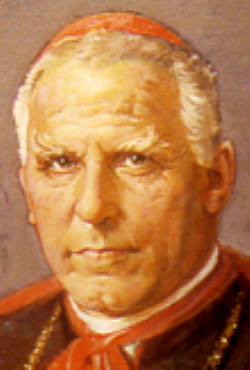
The German resistance against the Third Reich took inspiration from Protestant leaders like Bonhoeffer and Catholic leaders like Bishop Clemens August Graf von Galen who publicly decried the Nazi’s euthanasia program. These and other church leaders publicly criticized the Third Reich’s arrests of clergy, taking church properties, intrusions into church governance, and persecution of the Jews. These courageous Christian leaders were able to connect with their peers and superiors and other civil leaders outside the country to smuggle Jews to safety. The Catholic Church and Vatican opposed the systemic murder of Jews and assisted in their efforts. These leaders’ acts of overt resistance inspired others like the White Rose student group in Munich. Their courage stimulated and guided other leaders in the political resistance against the Third Reich. Some of the many stories are highlighted at the German Resistance Memorial Center.
Those who realize the incredible challenges of our day should take courage and join in the prayer at the end of the article: “Heavenly Father, in the mighty name of Jesus, we pray right now that this powerful testimony, this review of Dietrich Bonhoeffer’s life will ignite the heart, move the conscience, and uplift the senses—so that the Holy Spirit will lead us all to meaningful action, including repentance, reformation and revival. Lord, the rocks are crying out. Help us all to put off silence or suppression and answer with action. In Jesus’ name. Amen.”
Ricardo Davis
President, GRTL

Georgia Right to Life Committee (GRTL) is a faith-based, non-profit, non-partisan, non-sectarian organization whose fundamental purpose is to engage in actions that will restore respect and effective legal protection for all human beings from the moment of fertilization until natural death.