
Automated IVF
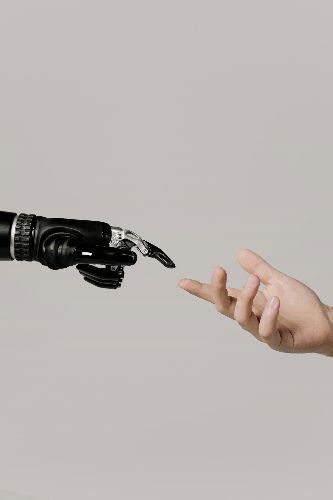
For the first time, a robot has helped conceive human life through automated in vitro fertilization (IVF). This isn’t a glimpse into the future; it is happening now.
The dawn of a new era in IVF is here, and with it, human life is being reduced to that of a test subject. The IVF industry is booming, with little regulation and tech start-ups eager to profit. In fact, it is widely known that the minimal regulations in place “are being relaxed to give clinics more autonomy and less regulatory oversight or accountability when performing IVF.”[1]
Engineers from Barcelona have already begun to capitalize on the opportunity to automate IVF, hoping it would make the process “less expensive and far more common.”[2]
Note that their considerations for the automation of IVF lack ethical motivation. The innovation is spurred on by the progression of an industry, not by the desire to protect human life or increase an embryo’s odds of survival. One advisor admits that the IVF field has a “history of introducing innovations without appreciably increasing pregnancy rates.”[3]
In the lab, human life is treated casually by engineers who have “no real experience in fertility medicine.”[4] One of the mechanical engineers conducting the procedure (i.e. commanding the robot to inject the sperm inside the egg) considered this to be “just one more experiment.”[5] However, this is not simply an experiment; this is human life.
In New York City, the New Hope Fertility Center began using a sperm-injecting robot with the intention of experimenting with human life. More than a dozen eggs were fertilized in the process, and only two babies survived through birth. The horrifying reality remains that human life is being treated without dignity or care in this facility.
Eugenics
By allowing IVF to flourish, eugenics has reared its ugly head. Engineers and researchers are confident that “automating parts of the [IVF] process… could make IVF less expensive and eventually support more radical innovations, like gene editing….”[6] Although this is a look towards the future, genetic selection has already begun.
It is now common practice for human embryos to be tested by preimplantation genetic screening (PGS), scored, and then ranked. Typically, the embryos who are not the desired sex or have a genetic disorder are ranked lower than the others. Dr. Tara Sander Lee refers to this practice as the “modern-day method of eugenics.”[7]
Subject to the whim of his or her parents, a baby’s fate may be sealed based on an arbitrary score. No human being deserves to be discarded, cast out, or frozen simply because he or she has “less optimal” DNA. Christians are called to love the imperfect and bear one another’s burdens, “not to please ourselves.”[8]
The right to life has been denied to those considered to be “inferior.” Eugenics, and the role it plays in IVF, is antithetical to Scripture. Indisputably, this is a fallen world in which man is exposed to suffering, disease, and imperfection as a result of sin. Yet, Christ’s love for His creation remains unconditional, and that ought to be reflected.
Rights and Dignity
The so-called “reproductive autonomy” of parents is elevated far above the needs, rights, and dignity of preborn babies. Children are being used as “therapeutic agents” to fulfill the desires of others.[9] A right to have children cannot be derived from the desire to have children. Society has conflated wants and desires with rights far too often, and in this case, it has caused great harm to human life.
All human beings are image bearers of Christ from fertilization to natural death. Whether that life is conceived naturally or produced in a lab, every life has inherent, God-given value. Still, the current state of legislation fails to recognize personhood from the earliest point of human development, resulting in the genocide of millions and millions more to come as the advancement of technology sprints forward.
Sources
Reflections on In-Vitro Fertilization
The first babies conceived with a sperm-injecting robot have been born
Made, Not Begotten: IVF and the Right to Life Under Conditions – PMC
Maddie Broome
Georgia Right to Life
Communications Lead
[1] Reflections on In-Vitro Fertilization
[2] The first babies conceived with a sperm-injecting robot have been born
[3] The first babies conceived with a sperm-injecting robot have been born
[4] The first babies conceived with a sperm-injecting robot have been born
[5] The first babies conceived with a sperm-injecting robot have been born
[6] The first babies conceived with a sperm-injecting robot have been born
[7] Reflections on In-Vitro Fertilization
[8] Romans 15:1; Galatians 6:2
[9] Kummer S. Made, Not Begotten: IVF and the Right to Life Under Conditions. Linacre Q. 2022 Nov;89(4):420-434. doi: 10.1177/00243639221116160. Epub 2022 Oct 18. PMID: 36518707; PMCID: PMC9743029.